Saturday, September 4, 2010

Corporate Wellness

The rising cost of health care and it’s affect on the bottom line of corporations across America is a major concern for today’s leaders. Long outdated is the model of focusing treatment and resources on those who are already sick or disabled. We are now facing trends of shrinking margins, the recent health care bill and a lack of productivity due to absenteeism and the rising cost of treatment.

An increasing number of corporations are taking a proactive approach to increasing costs by providing wellness programs as a part of their employee benefit package. Research shows that corporations who provide healthy choices and provide employee wellness programs are seeing long term savings in terms of sick time disability and other health care costs. Companies that have adopted, and implemented an effective wellness culture are seeing a happier, more productive workplace.
There are numerous approaches and components available to employers with measurable outcomes. Each program must be individualized for your organization, and all options must be carefully analyzed to find a best fit for specific and long term goals and objectives. An article entitled One Wellness Program Doesn’t Fit All Businesses, found that the key to a successful wellness program is developing a customized program that meets the individual goals and needs of each individual organization.

In the following few pages we will examine the problems of rising health care more closely, look at the research, and propose a solution that will benefit both the organization as well as the employee.

The Problem

Today employers are finding themselves staring at a major fork in the road. With the cost of Health Care increasing at a rate of 15% annually, company profitability and long term survival are in jeopardy. Studies have indicated that the rapidly increasing cost of health benefits is the single largest expense line on a company’s profit and loss statement. These increases are becoming harder to sustain at any level.

Only one in twenty adults regularly engage in the top three healthy lifestyle behaviors.
* Well Balanced Nutrition* Get at least 7 hours of sleep
* Regular Exercise
0ver 67% of the American population is now considered overweight or obese. This means that there are close to 100 million Americans that are obese! Studies are also predicting that by 2012 the percentages will reach 75%. Regardless of age, gender, or race the number of overweight and obese Americans is increasing faster than they are decreasing. Since 1980 the prevalence of overweight people has increased from nearly 15% to 34%+. During the same time span obesity has skyrocketed from 15% to over 67%. From 1988 to 2002 the prevalence of extreme obesity has increased from 3% to 5%.

Research has shown that as weight increases to reach the levels referred to as "overweight" and "obese," the risks for the following conditions also increases:• Coronary heart disease
• Type 2 diabetes
• Cancers (endometrial, breast, and colon)
• High blood cholesterol
• Hypertension (high blood pressure)• Dyslipidemia (for example, high total cholesterol or high levels of triglycerides)
• Stroke
• Liver and Gallbladder disease
• Sleep apnea and respiratory problems
• Osteoarthritis (a degeneration of cartilage and its underlying bone within a joint)
• Arthritis
• Gynecological problems (abnormal menses, infertility)
Higher grades of obesity are associated with excess mortality, primarily from cardiovascular disease, diabetes, and certain cancers. Wellness programs that improve social and physical environments for healthful eating and physical activity are great preventive strategies for a healthy environment. This equates to healthier, more productive employees as well as a healthy bottom line.

The Research, Statistics and Costs
When researching the benefits of a wellness program it’s good to investigate some of the data.
Consider the following:
* According to the Center for Disease Control (CDC), the typical American diet is responsible for most of the preventable diseases, including 90% of diabetes, 80% of heart disease, and 70% of colon cancer.
* The CDC also reports that less than 16% of adults engage in regular physical activity, while over 60% report getting virtually no regular exercise.

* According to the Wall Street Journal the 15 most expensive diseases account for 43% to 61% of health care spending growth from 1987 to 2000. The four costliest conditions are heart disease, mental disorder, pulmonary disorders, and cancer account for most of the increase.

* The American Journal of Preventative Medicine found that, employers who invest in worksite health promotion programs can see a return of $2-$10 for every dollar invested over a 2-5 year period. Documented savings are a combination of lower medical costs, absenteeism, worker’s comp claims, short-term disability and presenteeism.

* A review of 32 studies of corporate wellness programs found claims costs were reduced by 27.8%, physician visits declined 16.5%, hospital admissions declined 62.5%, disability costs declined 34.4%, and incidence of injury declined 24.8% after a corporate wellness program was instituted.

* Johnson & Johnson reported average annual savings of $8.5 million during 4 years when 18,331 employees participated in a health and wellness program at work.

* A separate study of the same group showed reductions in tobacco use, sedentary lifestyle, high blood pressure, high cholesterol, low dietary fiber intake and poor motor vehicle safety practices.

* Studies show that employees who utilized an employee fitness center gained both physical and psychological benefits: 64% reported an improvement in morale, 70% reported improved job satisfaction, 66% reported improved work productivity, 83% reported improved energy levels, 76% reported an improvement in stress management, and 70% reported an increase in attentiveness at work.

* Employers currently spend more than $390 billion per year on employee health insurance, with annual health care cost increases significantly exceeding the overall rate of inflation.

* The Wall Street Journal, states health care costs per capita will reach $7,500 this year (2008), more than double the $3,470 per person in 1993.
* The rate of inflation in this arena continues to grow at an unsustainable annual rate of 8-14%.
* National data has shown that employee turnover ranges between 20-25% for firms of 1,000 or more employees.

* The actual dollar cost of turnover varies based on a variety of factors, but estimates range from $25,000 per individual and a range of 75% to 150% of an employee’s annual salary.

* In a study of 370,000 employees, Goetzel et al found that presenteeism losses accounted for the majority of per person annual total costs for 9 out of the top 10 most expensive health conditions, with only heart disease having the majority of total costs attributed to medical claims. Other notable factors include:
* Unapproved absenteeism
* Lack of productivity
* Increased turnover
* Recruitment
* Decrease in customer service* A Duke University study involving 11,700 individuals, tracked the increased costs tied to BMI (Body Mass Index).
* Normal BMI $7,500
* Overweight $13,300* Mildly Obese $19,000
* Moderately Obese $23,000
* Severely Obese $51,000

* It must be noted that this “overweight” category (excluding all obese levels), represent well over 30% of the entire population, comprising an immense cost to employers.
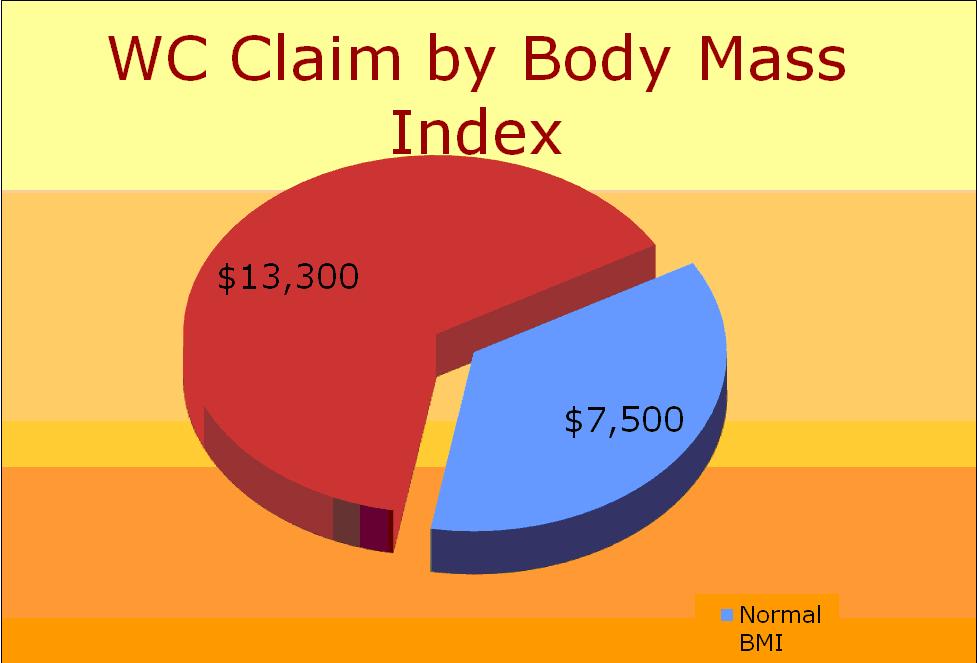
The Graphs above clearly show that its not just the obese and moderately obese that need attention.

* Research has also shown that lack of exercise is a major contributor to serious health conditions including but not limited to osteoporosis, stroke, and mental health conditions.

* Reduction in health care costs by 20-55%

* Decrease in short-term sick leave by as much as 32% (Ceridian Prop ROI Tool, 2003)

* A savings of between $3 and $6 for every $1 invested in wellness (U.S. CDC)

* Drop in work comp and disability by as much as 30%

* Enhanced recruitment and retention for all positions

* Examples of companies that have pursued a model of wellness are expansive and growing quickly. 11% of companies have full-fledged wellness programs as part of their employee benefits, and an additional 8% plan to add wellness in the next 12 months.

* Successful programs include Bank of America, Pacific Bell, Coca Cola, Prudential, DuPont, and Johnson & Johnson.

This data can seem overwhelming; however, it should also bring solace to corporations who currently have, or are now considering implementing a comprehensive wellness program. The bottom line will reflect efforts across all ranges of employees regardless of the individual’s Body Mass Index. Body Mass Index (BMI) is a number calculated from a person's weight and height. BMI provides a reliable indicator of body fatness for most people and is used to screen for weight categories that may lead to health problems.


The Solution

When considering a corporate wellness program, keep in mind that it is far better, and less expensive, to prevent employee health problems than to treat them after they occur. It is evident that past attempts to control health related costs have failed and stand to drastically increase in the next few years. Because of the threat of increased expenses, employers sink time and money in a one size fits all programs. A comprehensive wellness program needs to be tailored to fit each individual employee regardless of health issues, BMI, goals and limitations.

Keep the following in mind when selecting an addition to your wellness program:
* Is this customizable to the needs of the few or the majority of your employees, and does it meet their individual needs and goals?
* Fat loss
* Firming and toning
* Muscle gain
* Diabetes
* Cholesterol reduction
* Thyroid issues
* PCOS
* Varieties of nutrition sensitivities
* Event specific training and nutrition
* Professional consultation
* And the list goes on…
* Who can use the services provided?
* Are results measurable and attainable?
* Can you at any time get objective data?
* What is provided by the organization?
* Customized programs based on employees needs, wants and goals
* Nutrition
* Cardio
* Resistance training
* Supplementation
* Professional assistance on a weekly basis and as needed
* How time consuming is the process for you and your team?
* What are the costs?
* Corporate
* Employees
* Efficiency of programs and services
* Track record and history
* Ongoing educational seminars
* Wellness newsletters

Keeping the above considerations in mind, your wellness team will be able to identify the organization that will best suit your needs and goals in designing, or adjusting, your wellness program.

Conclusion

While the information that exists regarding wellness programs is overwhelming and difficult to sift through; the statistics speak for themselves. Employers who do not consider a high quality wellness program face an increase of 10-15% in direct costs related to rising health plan premiums; not to mention all of the indirect costs related to an unhealthy workforce. Numerous corporations have implemented successful wellness programs and have seen dramatic results in the increased health and productivity of their employees, as well as reduced costs associated with absenteeism and health care.


We provide the finest quality personalized nutrition and fitness programs. We offer individualized programs tailored to the specific needs of our clients. Your employees will receive the finest programs and world class service by our staff. We use sound scientific guidelines to meet the needs of our clients.

We offer individualized:
o Wellness seminars
o Body fat analysis
o Fitness assessments
o Nutrition, cardio, weight training and supplementation programs
o Individualized accountability
o Progress tracking
o Do it yourself programs
o Online consultations
o Phone consultations
o One on One consultations
o Goal setting
o Encouragement and motivation

We focus on improving not only the health of your employees but helping them change their lifestyles.

We offer affordable options regardless of budget or needs. You owe it to your workforce, as well as to your bottom line, to take a closer look. You won’t be disappointed!

To schedule a meeting please call or email Jared  801-792-5491 jared@resolutewellness.com

Thursday, March 18, 2010

Glycemic Index and Sugar


Sugars

Glucose

Glucose is the simple sugar made by the body through digestion of carbohydrates. It is the body's chief source of energy. Sometimes glucose is called dextrose.

Sucrose

Sucrose is what we commonly refer to as table sugar. It is made from highly processed sugar cane or sugar beets. The composition of sucrose is a combination of glucose and fructose, which separates during digestion. Pure sucrose is devoid of any nutrients.

Fructose

Fructose, commonly called fruit sugar, is a simple sugar found in honey, tree fruits, berries, and melons. But don't be fooled into thinking fructose on a label means you are eating fruit sugar. Pure crystalline fructose comes from two sources: corn or sucrose (table sugar). Corn starch is processed to release fructose. Sucrose (table sugar) is enzymatically hydrolyzed to separate into glucose and fructose. Crystalline fructose is pure fructose from one of these two sources.
High fructose syrup High Fructose Corn Syrup is made from starches like corn, wheat, and rice. High fructose syrups contain nearly equal amounts of glucose and fructose, a composition nearly identical to sucrose (table sugar). The reason high fructose corn syrup is so abundant in our processed food is simple-it's cheaper than sugar. Because we highly subsidize corn and place tariffs on sugar imports, high fructose corn syrup is much less expensive.
Pure fructose is 1.2-1.8 times sweeter than sucrose so less is needed for the same level of sweetness. It is low on the glycemic index, therefore it does not lead to peaks and dips in the body's glucose levels. But fructose is processed in the liver. When too much fructose enters the liver at once, the liver can't process fructose as a sugar. Instead, the liver turns excess fructose into fats-triglycerides. When you incorporate these fats into our bodies cells (the cell membranes) triglycerides cause these cells to be insulin resistant. This is the reason that high fructose corn syrup leads to diabetes. Fructose is linked to significant increases of both cholesterol and triglycerides. And remember-fructose, like sucrose-is a highly refined processed sugar devoid of any nutrition.
Also check out Issue 5, High Fructose Corn Syrup, A Not So Sweet Surprise

Maltose

Maltose, also known as malt sugar, is half as sweet as sucrose (table sugar). It is produced from starch (barley, wheat, rice or other grains). It has been produced in China since 200 B.C. We use it in making beer and as an additive to some processed foods.
In our bodies, maltose is formed as the first step in digestion of starchy foods. It is then broken down into glucose.

Lactose

Lactose is the sugar found naturally in milk.

Date Sugar

Date sugar is 100% dehydrated dates ground into small pieces. It is a whole food, high in fiber, vitamins, and minerals. Date sugar can be substituted for granulated sugar or brown sugar cup for cup, but it does not dissolve in liquids. Most alternative health practitionars consider Date Sugar to be a healthy sugar alternative. We did not include it in the chart because we could not find its glycemic index.

Sugar Alcohols or Polyols

Maltitol, maltitol syrup, sorbitol, mannitol, xylitol, lactitol, erythritol, and isomalt are examples of sugar alcohols. They occur naturally in plants, but are usually manufactured from sugars and starches. Sugar alcohols have fewer calories than sugars because they are not completely absorbed by the body. They can ferment in the intestines and cause gas, bloating, and diarrhea.

Glycemic Index

When carbohydrates are digested, glucose is released into the bloodstream. The glycemic index is a comparative measurement of the amount of glucose released by a particular food over a two to three-hour period.
Foods that rapidly release glucose rate high on the glycemic index (GI). Foods that slowly release glucose are low on the glycemic index. Mixing high and low GI foods can result in a moderate glucose release.
But the GI rating alone does not give you all of the information you need to determine a food's effect on your blood sugar. It only tells you how quickly the carbs in a food should turn into sugar in your blood. The glycemic load or GL tells you how much of that carb the food contains. And of course the amount you eat of that particular food is also a huge factor in the rise of your blood sugar.
Foods ranked low on the GI scale release glucose slowly and steadily without a sudden spike of glucose in the blood.  A spike in glucose results in a large insulin release, which is more likely to store glucose as fat rather than use it as fuel. Plus a high release of insulin often results in a rapid drop in blood sugar, causing hunger. So you eat candy. Your blood sugar spikes. Insulin is released. Your blood sugar drops. You eat more candy. The sugar rollercoaster ride begins.
It is important to remember that the GI scale is simply a comparative scale; it compares one food's blood glucose response to another. There are many other factors to consider when choosing your food. Start with the basic question. Is this food dense with nutrients? 
Sugars & Substitutes with their Glycemic Index
Artificial Sweeteners
N/A
Never a Healthy Sugar Alternative
All artificial chemical sweeteners are toxic and can indirectly lead to weight gain, the very reason many people consume them. They should be avoided. In fact, given a choice between high fructose corn syrup and artificial sweeteners, we recommend high fructose corn syrup by far (though it's essentially asking if you should consume poison or worse poison).
Stevia
0
Best Healthy Sugar Alternative
Though it is 200-300 times sweeter than table sugar, stevia is not a sugar. Unlike other popular sweeteners, it has a glycemic index rating of less than 1 and therefore does not feed candida (yeast) or cause any of the numerous other problems associated with sugar consumption. Read more about stevia at Organic Lifestyle Magazine (OLM). Please note that Stevia and Truvia are not the same thing.
Agave Nectar
15-30
A sweet syrup made from the Blue Agave plant, Agave Nectar is obtained by the extraction and purification of "sap" from the agave plant, which is broken down by natural enzymes into the monosaccharides (simple sugars): mainly fructose (70-75%) and dextrose (20-26%). Read more about agave nectar at OLM.
Fructose 
17
Though fructose has a low glycemic index rating, fructose consumption should be limited. Fructose is linked to heart disease as it raises triglycerides and cholesterol. It is devoid of nutrition.
Brown Rice Syrup
25
Though it is said to have a low glycemic index (25), it is not recommended for diabetics, since its sweetness comes from maltose, which is known to cause spikes in blood sugar.
Raw Honey
30
A Healthy Sugar Alternative in moderation        
With antioxidants, minerals, vitamins, amino acids, enzymes, carbohydrates, and phytonutrients, raw, unprocessed honey is considered a superfood by many alternative health care practitioners and a remedy for many health ailments. Choose your honey wisely. There is nothing beneficial about processed honey. Read more about honey at OLM.
Apple Juice
40
Fresh apple juice is good for you, though we recommend eating fresh raw whole apples. Concentrated apple juice (sometimes used as a sweetener) is closer to refined sugar than fresh apple juice.
Barley Malt Syrup
42
Barley malt syrup is considered to be one of the healthiest sweeteners in the natural food industry. Barley malt is made by soaking and sprouting barley to make malt, then combining it with more barley and cooking this mixture until the starch is converted to sugar. The mash is then strained and cooked down to syrup or dried into powder.
 Amasake
43
This is an ancient, Oriental whole grain sweetener made from cultured brown rice. It has a thick, pudding-like consistency. It's not easy to find in the U.S., but it is a great alternative to refined table sugar.
Sugar Cane Juice
43
Healthy Sugar Alternative in moderation
Sugar cane juice has many nutrients and other beneficial properties and is said by some health practitioners to be almost as medicinal as raw honey.
Organic Sugar
47
Organic sugar comes from sugar cane grown without the use of chemicals or pesticides. It is usually darker than traditional white sugar because it contains some molasses. (It has not been processed to the degree white sugar is processed).
Maple Syrup
54
Maple syrup is made by boiling sap collected from natural growth maple trees during March & April. It is refined sap and is therefore processed.  It has a high glycemic index, and though it is much more nutritious then refined table sugar and high fructose corn syrup, there are better choices.
Evaporated Cane Juice
55
Evaporated cane juice is often considered unrefined sugar, but juicing is a refining process, and evaporating refines further. Though better than turbinado, cane juice (unevaporated) is a better choice as a sweetener.
Black Strap Molasses
55
White refined table sugar is sugar cane with all the nutrition taken out. Black strap molasses is all of that nutrition that was taken away. A quality organic (must be organic!) molasses provides iron, calcium, copper, magnesium, phosphorus, potassium and zinc, and is alkalizing to the body.
Turbinado
65
Turbinado sugar is partially processed sugar, also called raw sugar.
Raw Sugar
Raw sugar
65
Raw sugar is not actually raw sugar. It is processed, though not as refined as common white table sugar. Therefore, given a choice between raw and white, choose raw. There are many different variations of raw sugar with many different names depending on how refined it is.
Cola (and most other sodas)
70
Though cola has a lower GI ranking then some might expect, there are many other reasons to avoid cola, or any type of soda. There is nothing beneficial to the human body inside a can of soda (not to mention we should avoid drinking out of aluminum cans!).
Corn Syrup
75
Corn syrup has very little nutrition and should be avoided.
Refined, Pasteurized Honey
75
The nutrition is gone, and there is often high fructose corn syrup added to processed honey. Refined pasteurized honey is no better than white table sugar.  
Refined Table Sugar
80
Conventionally grown, chemically processed, and striped of all beneficial properties, many health advocates believe that refined sugar is one of the two leading causes (high fructose corn syrup is the other) of nearly every health ailment known to man (or woman or child). Not only does it have a high GI ranking, but it also is extremely acidic to the body causing calcium and other mineral depletion from bones and organs (sugar is alkaline but has a very acidic effect on the body).
High Fructose Corn Syrup
87
Many health advocates believe that high fructose corn syrup and refined sugar are the two biggest contributors to health ailments in our society. High fructose corn syrup is a combination of sucrose and fructose.
Glucose (AKA Dextrose)
100
White bread was the benchmark, but for consistency glucose now holds the rating at 100.
Maltodextrin
150
Foods that have maltodextrin often say "Low Sugar" or "Complex Carbohydrate", but this sweetener should be avoided!
http://www.organiclifestylemagazine.com/blog/healthy-sugar-alternatives.php

Tuesday, February 9, 2010

Boost Performance With Vitamin D

Here is an interesting article I found.

Even with all of my fish oil supplementation it turns out that I have a Vitamin D deficiency, so I have started Vitamin D supplementation on the advice of my internist. Because Vitamin D is synthesized in the skin in response to sunlight exposure, it's not unusual for many individuals to find themselves with a Vitamin D deficiency, especially during the winter months when we spend most of our time indoors. Vitamin D plays such a crucial role in our health - ensuring healthy teeth and bones, modulating inflammation and even guarding against certain forms of cancer - it's important to make certain to have your Vitamin D levels checked during your annual physical. Vitamin D deficiency is reached for serum 25-hydroxyvitamin D (25OHD) levels less than 20 ng/mL (50 nmol/L), insufficiency in the range from 20-32 ng/mL, and sufficiency in the range from 33-80 ng/mL, with normal in sunny countries 54-90 ng/mL, and excess greater than 100 ng/mL. I tested at 25 ng/mL, which puts me at an insufficient level. If you need another reason to have your Vitamin D levels checked, consider that there are numerous studies, particularly in German research dating back to the 1950s, indicating that Vitamin D may actually boost athletic performance. As Vitamin D levels go up, so does performance (and vice versa). Of course, this is not to say that anyone should simply start arbitrarily supplementing with any Vitamin as Vitamins can be toxic. Make certain to have baseline blood work and supplement under the guidance of your physician. Train hard; stay strong. Peace.
Susan

http://catapultfitness.blogspot.com/2009/12/boost-performance-with-vitamin-d.html

Thursday, December 31, 2009

Tired of Water? Check Out These Fat Burning Alternatives


As most of you know, excess sugar is one of the biggest factors that contribute to our body's fat storage. You may also remember, that to lose fat you must always be properly hydrated. At least 100oz a day should suffice. I am a fan of water, no doubt, but I also love to drink things that are sweet. With all the sugary choices out that, here is a couple of the things that I personally like.


SOBE makes a variety of flavored drinks that are great tasting and also very low calories/sugar. Be careful to only get the LEAN series. All the others are just as much sugar as a can of soda. (about 6 teaspoons).


Crystal Light has been around ever since I can remember. The whole company is based on sugar free/low calorie beverages. These are great for making large amounts for a small price. They come in a large variety of flavors and taste great.


Vitamin Water is a newer brand that I like a lot. They are similar to Gatorade but not geared towards athletes. They too come in a couple different styles. The full sugar type and the 10 calorie type. Stick to the low sugar if you need something sweet that will help hydrate you and not spike your blood sugar.

Water is always the best option, but we all need something else sometimes. Just keep making wise choices and you will maintain that lean physique that you always wanted:)

http://yalesustainability.files.wordpress.com/2007/12/bottled-water.jpg
http://www.refreshmentworks.com/store/images/sobe_LEAN.jpg
http://www.sugarlessshop.com/2000/images/KF3.jpg
http://www.coffeeforless.com/images/uploads/intro/vitamin%20water%2010.jpg

Thursday, November 19, 2009

Nutrition & Exercise Consulting

Ever wondered if a Hollywood actor had problems losing or gaining weight for an upcoming film...probably not. They have the best people that science has to offer to create a diet and exercise program just for them... Yet research shows that 95 percent of dieters struggle. Weight-Loss and Fat-loss doesn't have to be this incredible complex thing we have let it become! Sign up for a free initial consultation so that you can find out which diet or program will be the best for your lifestyle and body composition!


Friday, October 23, 2009

Explaining Sugar Cravings


An enormous percentage of women crave sugar, carbohydrates, or alcohol. In most cases, these food cravings are not true eating disorders, but instead are signs of hormonal imbalance caused by a lack of healthy nutrition.

Your personal issue may be the afternoon snack (often chocolate or candy or a food that’s also heavy in carbohydrates), too many potato chips, the extra glass of wine at night, or a hundred other variations. But the underlying mechanism, and the way to curb cravings, is the same. And it has nothing to do with willpower, or your lack thereof!

Food cravings mean that the body has its signals mixed up. When we are exhausted or blue, we have low blood sugar and/or low serotonin, and the body signals the brain that it needs a pick-me-up. This signal causes a sugar craving or carbohydrate craving.

Serotonin is our basic feel-good hormone. If serotonin is low, we feel sad or depressed. And hormonal imbalance or weak digestion can lead to low serotonin. Unfortunately, sugars and simple carbohydrates release a short burst of serotonin — we feel good for a moment, but soon return to our low-serotonin state — then crave more sugar and simple carbohydrates. It’s a downward spiral.

If you eat a low-fat diet in the hope of losing weight, you unintentionally make the problem worse. If, like millions of women, you have eaten a low-fat, high-carbohydrate diet for many years, or followed fad diets, the odds are good that you have become at least partially insulin resistant.

Insulin is responsible for maintaining stable blood sugar levels by telling the body’s cells when to absorb glucose from the bloodstream. Being insulin resistant means your body stops responding to insulin, and instead grabs every calorie it can and deposits it as fat. So no matter how little you eat, you will gradually gain weight.

At the same time, your cells cannot absorb the glucose they need, so they signal your brain that you need more carbohydrates or sugars. The result is persistent food cravings.

Even worse, insulin resistance leads directly to obesity, diabetes, and heart disease. Many experts believe it is the root cause of the epidemic of those diseases in America today. And a low-fat diet makes it far more likely you will suffer from this condition.

Millions of American women are now trying the Atkins Diet or the South Beach Diet. While these diets are an improvement over the conventional low-fat, high-carbohydrate diet, they can worsen your metabolic problems, because dieting itself is stressful to the body. So many women need to heal their metabolism first before even considering weight loss.

Another cause of food cravings is adrenal fatigue. If you are under a great deal of stress, or suffer from insomnia or sleep deprivation, you are probably exhausted much of the time. This leads to adrenal fatigue or outright adrenal exhaustion, which in turn signals the body it needs a pick-me-up. You may resort to sugar or carbohydrate snacks or coffee during the day and carbohydrates or alcohol at night, all of which exacerbate the problem.

http://www.womentowomen.com/understandyourbody/symptoms/cravings.aspx

Tuesday, October 13, 2009

Choosing Healthy Drinks


There are many options for what to drink, but without a doubt, water is the best choice: It's calorie-free, and it's as easy to find as the nearest tap.

Drinks that are loaded with sugar are the worst choice: They provide lots of calories and virtually no other nutrients. Drinking them routinely can lead to weight gain and increase the risk of type 2 diabetes.

Other drinks have pros and cons, but in moderation, can fit into a healthy diet:

* Coffee and tea: These are calorie-free, as long as you don't load up on the sugar and cream. They are safe for most people and may even have some health benefits.
* Artificially sweetened drinks: These have no calories—a plus—but their long-term effects on weight and health are unknown, so it's best to limit them, if you drink them at all.
* 100% fruit juice: Fruit juice has vitamins, but it is high in calories, so stick to no more than a small glass (four to six ounces) a day.
* Milk: Milk is also high in calories, so there's no need to drink more than a glass or two of low fat or skim milk a day, and less is fine, if you get your calcium from other sources.
* Alcohol: Alcohol is both a tonic and a poison, and the difference lies in the dose and the person drinking it; moderation is key.

http://www.hsph.harvard.edu/nutritionsource/healthy-drinks/

Thursday, September 17, 2009

Super Antioxidant?


To appreciate the possible benefits of antioxidants, you must first understand what an antioxidant is. An antioxidant is anything that slows down or stops oxidation, a chemical reaction involving the uptake of oxygen. For example, the rusting of iron is an oxidation process that results in oxygen being taken from the atmosphere and combined with other elements to form something new. In the context of human cells, many metabolic processes use oxygen and result in the release of new oxygen-containing molecules, such as hydrogen peroxide, that can subsequently damage cells and body tissues and cause disease. An antioxidant is anything that mops up these oxygen-containing "free radicals" and removes them before they can do any damage.

Antioxidants benefits that are being celebrated in popular culture and widely studied in scientific research are those associated with certain diseases. Free radicals are thought to play an important role in the development of heart disease, cancer, physical changes associated with aging, and other health problems. Attention is largely focused on identifying food sources of antioxidants and determining whether the benefits of antioxidants can be increased by supplements containing particular antioxidant molecules.
It turns out that anyone who has used vitamin and mineral supplements has already enjoyed antioxidants benefits without knowing anything about it - a number of the common vitamins and minerals are antioxidants and this characteristic is a large part of their demonstrated contribution to good health. Vitamins that have been particularly noted for their antioxidant properties include Vitamins A, C, and E. Zinc, selenium and calcium are some of the antioxidant minerals. Other common dietary sources of antioxidants include carotenoids (beta-carotene, lutein, lycopene and others), bioflavinoids and related compounds, phenolic acids and related compounds, and various other molecules. The benefits of antioxidants can be obtained from some hormones as well.

Among the identified and suggested antioxidants benefits are protection against cancer, good eye health with prevention of degenerative eye diseases such as age related macular degeneration, protection of the central nervous system, a stronger immune system, and cardiovascular health with increased protection against heart attacks and strokes. These benefits of antioxidants, however, are obtained by including a wide range of different healthy foods in the diet, rather than by taking high doses of one or two specific antioxidants. High doses of antioxidants, in fact, may do more harm than good.
If you want to enjoy the benefits of antioxidants, the best approach is probably the traditional one: eat a healthy diet rich in plant sources and combine this with a healthy active lifestyle. If you suspect that your diet is not what it should be, you might want to add a multivitamin and mineral supplement containing moderate and safe amounts of a variety of antioxidants. Discuss particular heath problems with your doctor.
http://www.antiaginginfo.net/benefits-of-antioxidants.htm

Wednesday, September 2, 2009

Diabetes Study: Diet Can Help Avoid Drugs


Something we already know, but interesting.


By SHAHREEN ABEDIN Shahreen Abedin Wed Sep 2, 3:40 am ET

In the longest-term study of its kind, researchers pitted two popular diets head to head - a low-fat American Heart Association–style diet and a carb-controlled Mediterranean diet, each combined with regular physical activity - in a population of overweight patients who had Type 2 diabetes.

Researchers found that over the four-year study, patients who adhered to the Mediterranean-style eating plan maintained lower blood-sugar levels for a longer time than those in the low-fat-diet group. On the basis of their findings, the study's authors suggest that some diabetes patients may be able to substitute diet and exercise for blood-sugar-lowering medications.

The study involved 215 overweight adults in Naples, Italy, who were newly diagnosed with Type 2 diabetes. Patients were randomly divided into two diet groups: the low-fat eaters were instructed to follow a regimen rich in whole grains, fruits and vegetables and low in additional fats, sweets and high-fat snacks; no more than 30% of daily calories were to come from fat and no more than 10% from saturated fat. The Mediterranean-diet group was taught to eat lots of fruits, vegetables, whole grains and healthy fats, including olive oil, with an emphasis on lean protein sources such as fish, chicken and nuts. Mediterranean dieters were instructed to limit carbohydrate intake to less than 50% of their daily calories. (Read "Study: Diabetes Linked to Cognitive Decline.")

All dieters were encouraged to exercise regularly and received regular nutrition counseling throughout the course of the study. Regardless of the specific eating plan, the study's participants were required to restrict their daily caloric intake: 1,800 calories maximum per day for men, and 1,500 calories daily for women - a significant reduction from what the average American eats daily (about 2,600 calories for men and 1,800 calories for women, according to government statistics).

By the end of the study, which was published in the Sept. 1 issue of the Annals of Internal Medicine, 56% of patients following the Mediterranean diet were able to control their blood sugar without medication, compared with 30% of those on the low-fat regimen. The Mediterranean dieters were also able to maintain slightly more weight loss than the low-fat group - 8.4 lb. vs. 7.1 lb. - and showed small improvements in triglyceride and HDL cholesterol (the good kind) levels, both risk factors for heart disease.

"A Mediterranean-style diet is a very important part in the treatment of diabetes. We knew that," says Dr. Loren Greene, a New York University Medical Center endocrinologist, who was not involved in the study. "But there just hasn't been a good study to confirm this before." Some past studies have suggested that eating fewer carbohydrates can help diabetes patients lower their blood sugar. Other research has shown that intake of monounsaturated fats like olive oil can improve patients' insulin sensitivity, allowing the body to naturally control blood sugar more effectively. (Read "Heart Risk for Diabetics May Be Exaggerated.")

The current study does not make clear, however, whether diet alone can reduce blood sugar enough to eliminate the use of diabetes medication or whether it is even advisable to forgo medication at all. Participants in the new study were kept off drugs when their A1C levels - a measurement that indicates a patient's blood-sugar levels over the previous three months - were below 7%, the standard cutoff for what is considered controlled blood sugar. But "we don't know for sure if people with A1C levels under 7% still need to be on drugs," says Greene. "The research just hasn't answered that question yet." Recent studies suggest that using blood-sugar-controlling medication even among the 57 million Americans who have prediabetes - meaning they have elevated, but not dangerously high blood sugar and are at very high risk of developing diabetes - may prevent the development of heart disease and stroke.

While diabetes doctors generally agree that the first line of defense against Type 2 diabetes should always be exercise and diet, many recommend also using drugs. For its part, the American Diabetes Association advises patients with Type 2 diabetes to make appropriate lifestyle changes and to start a drug regimen immediately upon diagnosis. Dr. R. Paul Robertson, a spokesperson for the organization, says that for people with diabetes, "the goal should not be to avoid drugs. It is to do everything you can to keep your sugar levels down."

Still, many doctors acknowledge patients' aversion to chronic drug-taking. "Almost universally, people don't want to take medicine if they can avoid it," says Greene. And physicians, including internist Dr. Christine Laine, who is the editor of the Annals of Internal Medicine, point out that the direct and indirect costs associated with taking a drug - even one as widely prescribed as the generic diabetes medication metformin - can serve as a barrier for many patients, especially among disadvantaged populations and those without health insurance.

Whether avoidance of medication in certain cases proves to be reasonable, for now it can at least be used as an effective incentive to improve lifestyle habits, says Greene: "If you are told, 'If you don't want to go on medicine, stick to this diet,' then that's a pretty valuable tool at least for patient compliance."


http://news.yahoo.com/s/time/20090902/hl_time/08599191981800